
Brass fittings are often chosen out of habit. A plumber reaches for brass because that is what was in the van, and a distributor stocks brass because that is what sells. Habit is a weak justification, though, and it collapses the moment a plastic alternative arrives at half the price.
The better argument is physical. Brass earns its place in a plumbing system because of what copper and zinc do together: it resists corrosion in water, it holds a thread under torque, it survives heat and sunlight without changing shape, and it can be taken apart and put back together years later. Those properties are not marketing claims, they are the reason the material has survived a century of competition from cheaper alternatives.
This article walks through the benefits in the order they actually matter to a building owner, then sets out where brass is the wrong answer, because a material recommendation without limits is not a recommendation.
Corrosion resistance that matches the tube it connects
The first job of any fitting is to not fail from the inside. Brass forms a thin, stable oxide layer on its surface that slows further attack, and in typical potable water, hard or soft, it holds up for decades. It also tolerates the mildly aggressive conditions that appear in real buildings: residual chlorine, fluctuating pH, dissolved oxygen, and long periods of stagnation in a shut-off wing of a school or an office.
The honest caveat is dezincification. In water with elevated chloride, low flow, and higher temperature, zinc can be leached selectively from high-zinc brass, leaving a porous copper structure that looks pink and eventually leaks. This is not a hypothetical; it is the main corrosion mode for the material. The answer is grade selection rather than abandonment: dezincification-resistant brasses, formulated with small additions of arsenic, antimony, or phosphorus, resist the mechanism, and low-zinc silicon brasses resist it largely by composition.
That distinction matters when someone claims brass "corrodes." Usually what corroded was the wrong brass in the wrong water.
Strength exactly where the system is thinnest
A plumbing system is a chain of components, and the fitting is usually where the wall is thinnest and the stress is highest. Brass handles that role well. It carries the full pressure and temperature range of the tube it serves, it accepts installation torque without deforming, and it does not creep under sustained load the way thermoplastics can at elevated temperature.
Ductility matters here too. Brass deforms before it fractures, which means an overloaded fitting usually shows a bulge, a stretched thread, or a weep before it splits. Brittle materials give no such warning; they crack and release.
The practical benefit is a wider margin for installation error. A brass fitting that is a quarter-turn tighter than ideal will usually still seal. The same error on a plastic component can crack it, and the crack may not show until the system is pressurized.
Joints that hold, and can be reopened
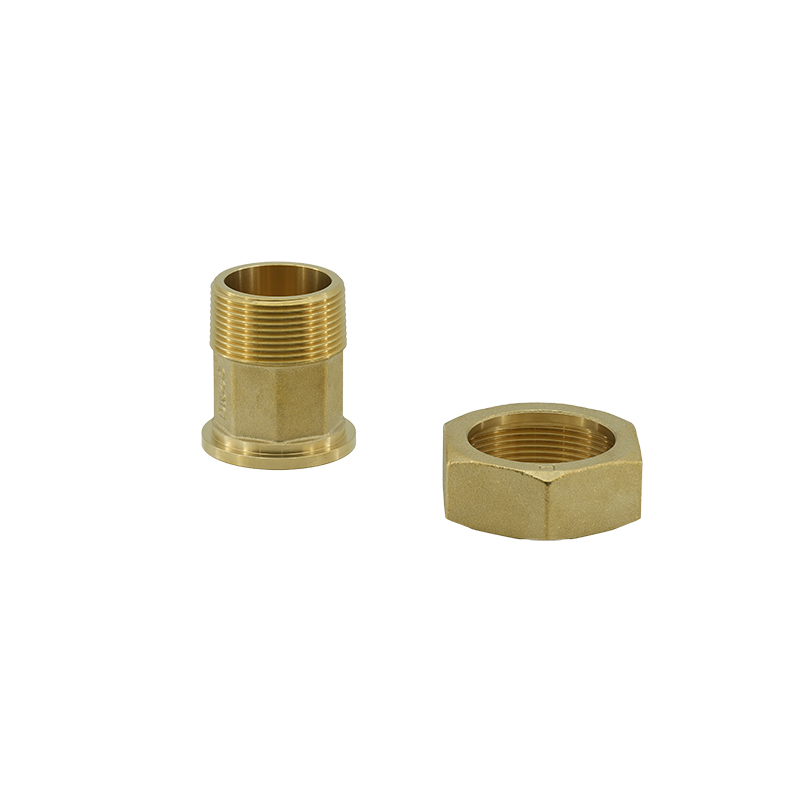
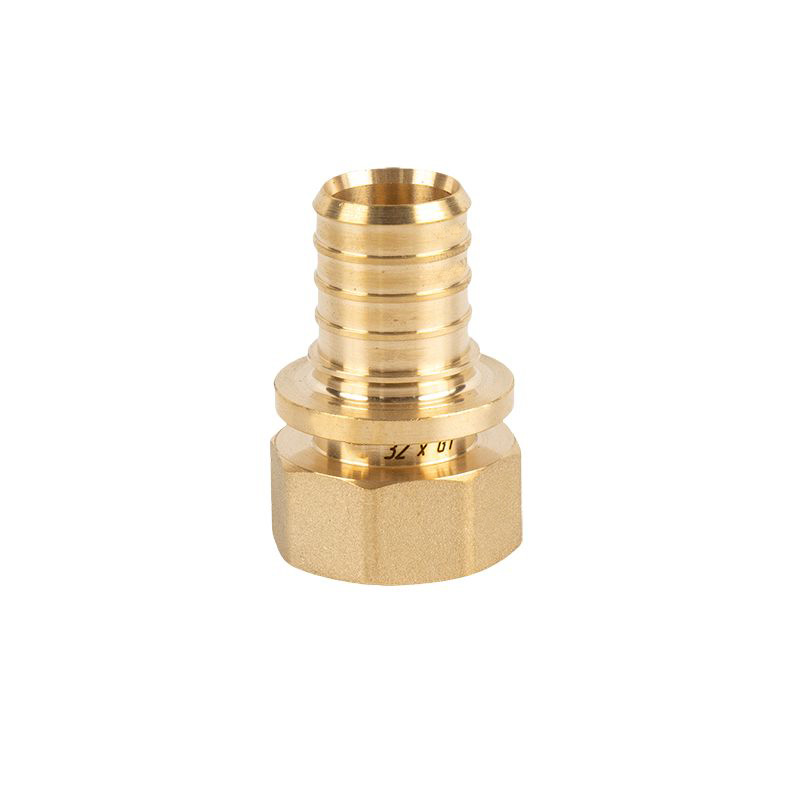
Brass supports every common joining method, which is why it works as the universal adapter in mixed-material buildings: threaded NPT or BSP, barbed insert with a crimp or clamp ring, press-connect, compression, and soldered or brazed connections.
Two properties stand out. First, brass holds a thread. Repeated assembly and disassembly does not strip it the way softer materials do, so a valve or a fitting can be removed for service and reinstalled without a replacement part. Second, brass does not gall as readily as stainless steel, which is a real advantage in threaded assemblies that will be taken apart after years in service.
For maintenance work, that serviceability is the whole benefit. A threaded brass connection can be broken, inspected, resealed, and closed again in an afternoon. A solvent-welded plastic joint cannot. When a building has to stay occupied, the difference between a repairable joint and a destructive one is measured in downtime.
A service life that matches the rest of the system
Brass fittings are commonly expected to last as long as the piping they connect, with service lives cited at 50 years or more in normal potable and hydronic conditions. That matters because a fitting that fails at year fifteen undermines a tube designed for fifty.
Long life is not the same as immortality, but the failure modes are at least visible and slow. A brass joint that is starting to weep shows a mineral crust or a green stain while there is still time to act. Compare that with the failure mode of an ageing plastic connector, which can embrittle and then crack without warning under a pressure surge.
The other half of longevity is stability of dimensions. Brass does not swell, soften, or relax over time, so the clearances designed into a joint at installation are still there decades later.
Lead-free is now the standard, not an exception
The historical objection to brass in drinking water was lead. Free-machining brasses once contained several percent lead, added to improve machinability, and that lead could leach into standing water.
That objection has largely been engineered out. In the United States, NSF/ANSI 372 limits the weighted average lead content of wetted surfaces to 0.25%, and products are certified to NSF/ANSI 61 for health effects. Comparable schemes exist in Canada, Europe, the UK, and Australia. The lead-free alloys now used in fittings, including silicon brasses and low-lead yellow brasses, machine and forge well enough that the performance penalty has shrunk to tool wear rather than function.
The benefit to a specifier is straightforward: brass can be used in potable water systems without the legacy concern, provided the product is certified and the certification covers the actual product and factory. "Lead-free" is a compliance status, not a material description, and it should be verified rather than assumed.
Compatibility across the whole system
Buildings are rarely single-material. A renovation may join new PEX to old copper, a boiler loop may mix brass with steel, and an irrigation zone may connect to a galvanized riser.
Brass is the material that makes those transitions routine. It accepts the standard threads that steel and copper systems use, it accepts barbed and press connections designed for PEX and PE-RT, and it can be machined into the reducing and adapting shapes that a mixed system needs. A distributor's ability to solve a transition problem with one brass fitting, rather than a chain of adapters, is worth more than a small difference in unit price.
The one compatibility limit worth repeating is galvanic. Brass is cathodic to steel and strongly cathodic to aluminum. Brass-to-steel is common and usually acceptable where the steel is not thin-walled; brass-to-aluminum is a corrosion cell that will fail, and a dielectric union is the correct answer.
Stability under heat, sunlight, chlorine, and glycol
Materials that live inside a wall still meet the environment. Brass handles that environment with very little drama:
Heat. Brass holds its mechanical properties across the full range of domestic hot water and hydronic systems, with no softening or creep at the upper end of the range.
Sunlight. Brass is unaffected by UV. Plastic fittings and tube exposed on a roof or a south-facing wall degrade under ultraviolet light and need protection.
Chlorine and disinfectants. Municipal disinfection residuals attack some polymer systems at elevated concentrations and temperatures. Brass is not sensitive to normal residual levels.
Glycol and inhibitors. Hydronic systems run antifreeze and corrosion inhibitor packages. Brass is compatible with the common propylene and ethylene glycol mixtures, which is why it dominates in boiler and radiant systems.
Fire. Brass is non-combustible and contributes no fuel load. In commercial work, that simplifies detailing in plenums and risers where combustible materials need justification.
Recyclability and end-of-life value
Brass is one of the few construction materials with a genuinely functioning recycling loop. Copper alloys are collected, remelted, and reused without losing their properties, and the scrap value is high enough that brass is rarely landfilled. A fitting removed from a demolished building has a buyer.
That has a practical consequence beyond sustainability reporting: brass scrap has a floor value, so the material is not a stranded cost. It also has a downside that most articles omit, which is theft. Brass fittings and valves are stolen from construction sites and vacant buildings precisely because the material is worth recovering.
The environmental case should be stated honestly. Brass is not a zero-impact material; copper mining and refining carry significant embodied energy and carbon. Its advantage is durability, recyclability, and a long service life that amortizes that initial impact over decades.
Appearance and finish options
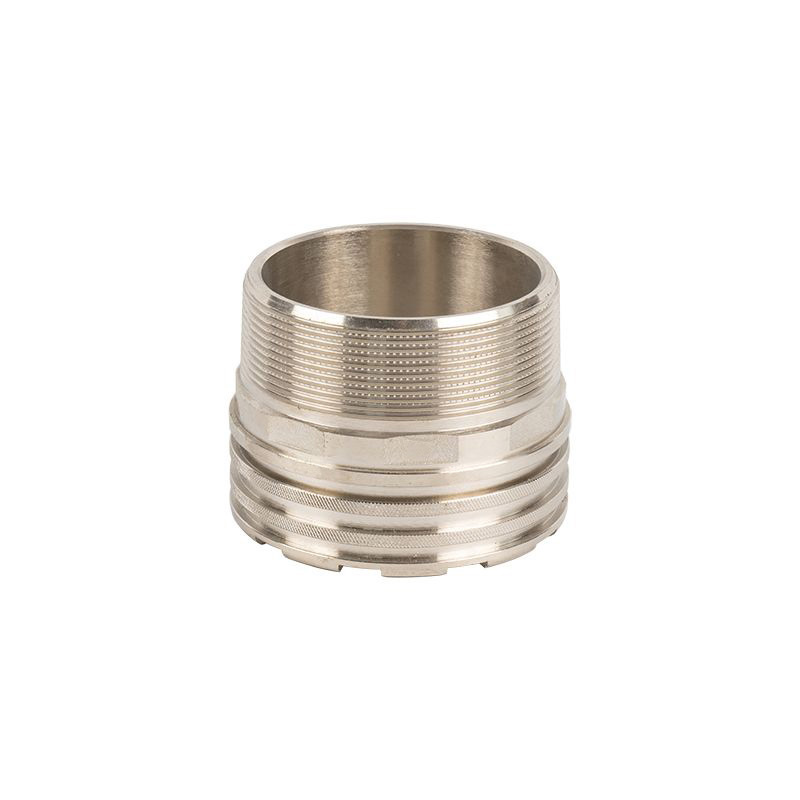
Where fittings are exposed, brass offers choices that other materials cannot match. Natural brass develops a warm tone that architects specify deliberately. Nickel and chrome plating provide a durable, corrosion-resistant, decorative surface for exposed valves, supply stops, and fixture trim.
Plating quality is the variable. Thickness, adhesion, and pre-treatment determine whether a decorative finish survives a decade of cleaning products or flakes at the thread in the first year. A specification that names a plating thickness in micrometres is doing more work than one that says "chrome."
Where brass is not the best answer
A benefit list without limits is a sales pitch. Brass loses in four situations.
Upfront cost. Brass costs more per unit than plastic. In high-volume, low-consequence applications such as irrigation laterals or condensate drainage, that premium buys durability the application does not need.
Weight and freight. Brass is dense. On a container of fittings, the freight cost per unit is materially higher than for polymer parts, which matters in export pricing.
Aggressive water. Very high chloride, low pH, or consistently high temperature can defeat even good brass. In those conditions, DZR grades are the minimum and polymer or stainless may be the better system choice.
Freeze risk. Brass is rigid. Water expands about 9% on freezing, and a brass fitting splits at its weakest section. PEX tolerates freeze events better because the tube can expand; a brass fitting in an unheated crawl space is a predictable failure point unless the line is drained or protected.
Comparing brass with the alternatives
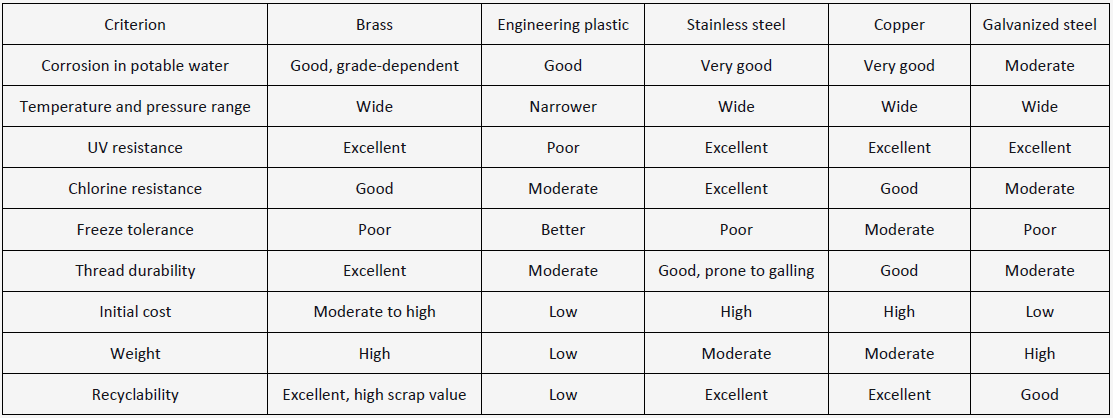
How to actually capture these benefits
The benefits above belong to well-made brass, not to every part sold as brass. Four specification habits protect the investment:
● Name the alloy, not the colour. A UNS or EN designation plus a lead limit is a specification; "brass" is a category.
● Require the certification for potable water, and verify that the listing covers the product family, alloy, and factory you are buying.
● Specify DZR where water chemistry is aggressive, and ask for the dezincification test result rather than a verbal assurance.
● Name the thread standard and the plating thickness. Most field problems that get blamed on material quality are actually interface or finish problems.
A supplier who can answer those four questions in writing is selling a different product from one who cannot, even if the photographs look identical.
FAQ
Q1: Are brass fittings better than plastic fittings?
A: For potable and hydronic work at domestic temperatures and pressures, brass generally offers better thread durability, wider temperature tolerance, UV stability, and serviceability. Plastic wins on cost, weight, and freeze tolerance. The right answer depends on the application, not on a hierarchy.
Q2: Do brass fittings contain lead?
A: Modern fittings sold for potable water are made from lead-free alloys that meet the 0.25% weighted-average limit under NSF/ANSI 372, and they are certified to NSF/ANSI 61 for health effects. Older or unmarked brass may contain leaded alloy, which is one reason documentation matters.
Q3: How long do brass fittings last?
A: Commonly 50 years or more in normal potable and hydronic service, matching the piping they connect. Aggressive water chemistry, excessive velocity, and poor installation practice shorten that considerably.
Q4: Can brass fittings be used with PEX and copper?
A: Yes. Brass is the standard transition material for PEX, PE-RT, copper, CPVC, and steel, using barbed, press, compression, or threaded ends as appropriate for each system.
Q5: Why are brass fittings more expensive?
A: Because copper is the dominant cost in the alloy, and the metal is the largest single input. The premium buys corrosion resistance, thread strength, and a service life that usually outlasts the lower-cost alternative. On a lifecycle basis the gap narrows or reverses, particularly where access for future repair is difficult.
Q6: Do brass fittings corrode?
A: They can, primarily through dezincification in high-chloride, stagnant, or hot water, and through stress corrosion cracking under ammonia exposure. Correct alloy selection, stress relief, and sensible water conditions prevent both.
The bottom line
Brass fittings are not chosen because they are traditional. They are chosen because the material solves four problems at once: it resists the water, it holds the joint, it survives the environment inside and outside the wall, and it retains value at the end of its life. Add a lead-free alloy and a real certification, and the historical objection disappears.
What remains is a material decision, not a marketing one: the right grade, the right route, the right thread, and the right documentation. Buyers who specify those four get the benefits described above. Buyers who specify only the size get a fitting that may look the same and behave nothing like it.
-